

An AI agent can create a data-processing job in seconds. That does not mean the company knows where to run it, how much compute it should use or whether it will finish before the next report is due.
Zipher is building a business around that operational problem. On November 24, 2026, the New York-headquartered startup announced $53 million in funding across its seed and Series A rounds from TLV Partners, Maor Investments and Glilot Capital. The announcement does not break the total into separate round amounts.
Its pitch is that AI agents should manage the infrastructure decisions behind enterprise data workloads, rather than leave engineers to adjust each job manually. Customers supply code, a budget and performance targets. Zipher says its agents work out how to run that code within those limits.
For a data leader, the useful question is not whether another company has raised money for AI agents. It is whether delegating these decisions can reduce operational work without making costs, reliability or production changes harder to control.
Table of Contents
What the funding will support
Zipher says the capital will support research and development and its go-to-market work. It plans to build its US enterprise sales operation and expand across Europe, the Middle East and Africa, Latin America, and Asia-Pacific.
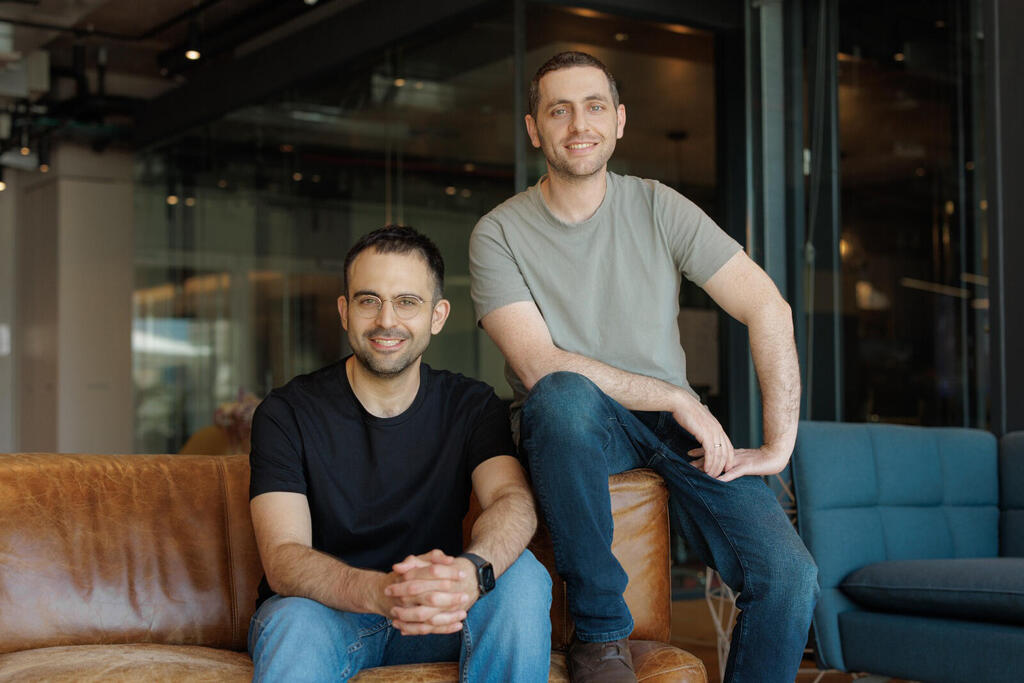
The company was founded in 2024 by CEO Dan Coster and CTO Yoav Gill Ben Ephraim. It is headquartered in New York with offices in Tel Aviv.
Funding can pay for product development, hiring and distribution. It is not independent proof that the product will meet a particular customer's requirements.
The problem: creating a job is easier than operating it
A data workload might transform transaction records, refresh a model's inputs or prepare information for an analytics report. Each job consumes resources and may depend on other jobs finishing first.
For example, a company might need its overnight sales data ready before a morning dashboard refresh. Running every job on oversized infrastructure could waste money. Cutting resources too far could delay the dashboard. A change that helps one job may also affect another that uses the same capacity.
This is an illustrative workflow, not a documented Zipher deployment. It shows why generating more code does not remove the need to manage cost, scheduling and dependencies.
Zipher's argument is that agents will increase the number and variety of these workloads. Its product applies agents to the operating decisions that follow.
What Zipher says its agents do
According to the funding announcement, Zipher learns a workload and its dependencies, then redesigns, routes and runs it on an appropriate engine using current capacity and load information. Decisions balance cost, performance and reliability against the customer's service-level agreement, or SLA.
That scope is broader than a dashboard that recommends a cheaper configuration. The company says its agents apply decisions autonomously. They can also rewrite a workload's framework, code and syntax.
Zipher says it supports workloads on AWS, Microsoft Azure and Google Cloud. It names integrations with dbt, Databricks Workflows, Apache Airflow, Azure Data Factory and infrastructure-as-code tools such as Terraform and Databricks Asset Bundles.
Those names are a starting point for evaluation, not proof that every workflow using those products is supported. A buyer should check the specific versions, engines, deployment arrangement and dependencies in their own environment.
What the customer evidence does, and does not, establish
The announcement says Zipher manages production workloads for Fortune 500 companies across several industries. It names Hertz and includes a statement from Gaurav Rastogi, its senior director of enterprise data analytics and BI platforms.
Rastogi reports compute-cost reductions of 25% to 40%, depending on the workload, while supporting consistent performance through seasonal peaks. Separately, Zipher describes broader customer cost-efficiency gains of 40% to 60% and up to 80% better SLA adherence.
These figures should not be combined into one promise. They describe different measures and scopes. The Hertz statement concerns compute costs for particular workloads; the wider ranges are company-reported results.
The material reviewed does not provide an independent benchmark, a complete breakdown of the measurement periods or enough detail to reproduce those results. It also does not establish the net savings a new customer would retain after software fees and implementation work.
The evidence is useful as a reason to investigate. It is not a substitute for testing representative workloads.
What buyers should check before delegating production decisions
1. Start with a defined workload and baseline
Choose jobs whose current runtime, compute cost, failure rate and deadline requirements are known. Include dependencies and busy periods. Compare the same work before and after deployment rather than compare two different workload mixes.
2. Separate compute savings from total cost
Request pricing and identify implementation, migration and ongoing operating costs. Ask which cloud charges the reported savings include. A reduction in compute spend does not automatically equal the same reduction in the total data-platform bill.
3. Understand the authority the agents receive
Ask what the product can change, which systems and credentials it needs, and whether teams can limit its scope. Because the company describes autonomous execution and code changes, access control is part of the product evaluation, not a later administrative detail.
4. Ask how changes can be inspected and reversed
Request a demonstration of the record of changes, failure handling and recovery process. Establish who owns an incident and what happens if a change slows a dependent job. The reviewed announcement does not settle the availability or detail of these controls; these are questions for the vendor, not verified product features.
5. Test the deadline, not only the bill
A cheaper job that finishes too late may be a worse outcome. Agree on acceptable runtime, reliability and data-quality criteria before a trial. Include peak loads and failures, not only a normal day with spare capacity.
Where it fits, and where to be cautious
Zipher appears most relevant to enterprise data teams with substantial production workloads and recurring decisions about resources, engines and scheduling. That fit follows from the product scope and named integrations, not from an independent ranking of the category.
It is not a general-purpose chatbot for writing reports. Nor does its funding announcement establish that a small team with a few simple scheduled jobs needs an autonomous infrastructure layer.
Teams should first identify the operational problem they want to solve. If costs and reliability are already predictable, adding another platform may create more work than it removes. If engineers repeatedly adjust complex workloads across changing demand, the product's proposed role becomes easier to evaluate.
The takeaway for AI tool buyers
Zipher's $53 million announcement points to a second layer of the enterprise-agent story: agents may create more work for data platforms, while other agents are being built to operate those platforms.
For a related but different part of the agent stack, read how Disseqt AI approaches enterprise agent assurance. Zipher addresses workload execution; assurance tools address how agents are tested and overseen. These are different jobs, not interchangeable products.
The useful buying test is specific. Can the product run your actual workloads within agreed cost and performance limits, with an acceptable level of control and a supported recovery path?
The funding gives Zipher resources to pursue that proposition. A measured trial, not the funding total, will tell a buyer whether it works for their team.


