

AI is changing how memes are created, shared, and adapted across the internet. AI-powered tools can generate captions, create images, and help people turn everyday situations into memes without requiring advanced design skills. What once took time and creativity can now begin with a simple text prompt.
However, creating a funny meme is not just about combining an image with a caption. Humor often depends on timing, cultural references, and shared experiences. While AI can reproduce familiar humor patterns, it does not always capture the context that makes a joke funny.
From early joke-generating bots to modern AI image generators, artificial intelligence is influencing meme culture in several ways. Here's how these tools are changing meme creation, along with their benefits and limitations.
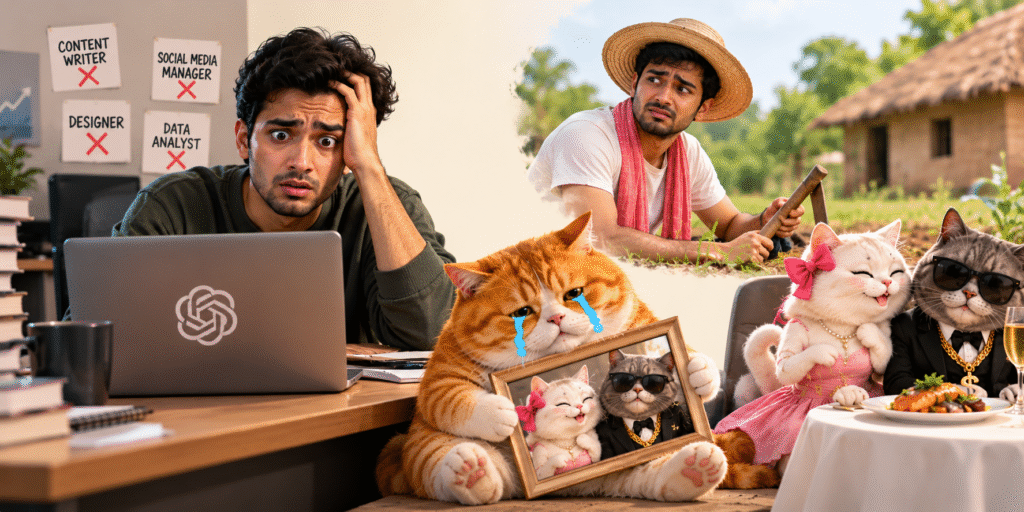
Table of Contents
How AI Is Changing Meme Culture
AI's role in meme culture has developed alongside advances in language models and image-generation technology. Early experiments focused on generating jokes from predefined formats, while newer tools can create captions and images based on user prompts.
1. Early AI Humor Attempts (2015–2018)
Early AI humor experiments often relied on predefined rules and templates. Tools such as InspiroBot generated unusual inspirational quotes, while DeepDrumpf used language models to imitate Donald Trump's speaking style. Their outputs sometimes became humorous because of unexpected wording or awkward combinations.
These experiments demonstrated that computers could generate content resembling human communication. However, their humor was often inconsistent and depended heavily on the patterns and rules used to create it.
2. The Rise of Meme Generators (2018–2020)
As language models became more capable, AI-generated text became more natural. Models such as GPT-2 and GPT-3 could produce captions, jokes, and other text that sometimes resembled internet humor.
Meme generators also made it easier for people to combine text with familiar images. Instead of manually writing every caption, users could experiment with AI-generated suggestions and adapt them to different situations.
However, generating a caption that looks like a joke does not necessarily mean the AI understands why people find it funny.
3. AI Image Generation (2020–Present)
Text-to-image tools such as DALL·E, Midjourney, and Stable Diffusion introduced new ways to create meme visuals. Users could describe a scene in a prompt and generate an image without taking a photograph or creating an illustration themselves.
Combined with language models, these tools can help creators develop both the visual and textual elements of a meme. They also make it possible to experiment with unusual characters, situations, and visual styles.
Today, AI can assist with several parts of meme creation, from brainstorming captions to generating images. The creator still needs to select, edit, and share content that fits the intended audience.
How AI Meme Generators Work
AI meme generators use different technologies to create captions and visuals. Some work with existing meme templates, while others generate new images based on text prompts.
A language model can suggest captions based on a topic or situation. An image-generation model can create a visual from a description, and a template-based editor can combine an image with text. Some tools bring these capabilities together in a single workflow.
For example, a user could ask an AI tool to create a meme about working late. The tool might suggest a caption, generate an image of a tired office worker, or place the caption on a familiar meme template.
The result may need editing. AI-generated captions can sound unnatural, and generated images may not communicate the intended joke. Human judgment remains important when choosing which version to share.
How AI Is Changing Meme Creation
AI is making meme creation more accessible to people who may not have graphic design or editing experience. Instead of starting with a blank canvas, creators can use prompts to generate ideas, explore different captions, and experiment with visuals.
It can also help creators adapt a familiar meme format to different subjects. A person creating content for a particular audience, for example, can ask AI to suggest captions related to technology, education, or everyday work situations.
However, speed does not necessarily lead to better humor. A meme that is technically well-designed may still fail if its joke is confusing or unrelated to the audience's interests.
The Benefits of AI-Generated Memes
AI tools can make several parts of meme creation easier, particularly for people who regularly produce social media content.
- Faster creation: AI can suggest captions and generate images in a short time, helping creators experiment with ideas without starting from scratch.
- Greater accessibility: People without design experience can use templates and image-generation tools to create memes.
- Creative experimentation: AI can suggest unexpected combinations of subjects, captions, and visual styles that creators can refine.
- Flexible content: Creators can generate ideas for different topics and audiences, then adapt the results to suit their needs.
These benefits make AI useful as a creative assistant. However, the quality of the final meme still depends on the idea, editing, and context.
The Limitations of AI-Generated Memes
Despite its advantages, AI does not consistently produce humor that feels natural or relevant. Its output can be useful for brainstorming, but it may require substantial editing before it is ready to share.
- Limited contextual understanding: AI may miss the cultural references, current events, or shared experiences behind a joke.
- Repetitive formats: AI-generated memes can rely on familiar templates and predictable punchlines, making some content feel unoriginal.
- Inconsistent humor: A caption that seems funny to one person may be confusing or uninteresting to another. AI cannot reliably predict how every audience will respond.
- Potential for misleading content: AI-generated images can depict events or situations that never happened. Creators should review images and provide context when necessary.
These limitations do not make AI meme generators useless. They highlight why reviewing and editing generated content is an important part of the process.
Can AI Understand Humor Like Humans?
AI can recognize and generate certain types of humor, including jokes, puns, and familiar meme formats. However, producing humorous content is different from understanding why a joke works.
Human humor often depends on experiences, cultural knowledge, tone, and timing. A meme about a recent event may be funny to people who understand the reference but confusing to everyone else. AI may generate a caption that follows the structure of a joke without capturing its intended meaning.
Research on language models and humor has found that models can perform well on some humor-related tasks but still struggle with certain forms of wordplay and interpretation. Their performance depends on the type of humor and the context provided.
For this reason, AI is more useful as a tool for generating and refining ideas than as a guaranteed source of funny content. Creators still need to decide whether a joke is relevant, understandable, and appropriate for their audience.
The Future of AI in Meme Culture
AI is likely to remain part of meme creation as image-generation and language technologies continue to develop. These tools can help creators experiment with new formats, generate ideas, and adapt content for different platforms.
They may also make it easier to combine text, images, and video when creating memes. However, the effect of these developments will depend on how people use the tools and how audiences respond to the content.
Human creativity will continue to play an important role. Understanding a community, recognizing a timely reference, and knowing when a joke is appropriate require judgment that cannot be guaranteed by an AI-generated result.
Rather than replacing human meme creators, AI can support parts of the creative process. The final choice of what to publish still belongs to the person creating the meme.
Conclusion
AI is changing meme culture by making it easier to generate captions, create images, and experiment with different forms of humor. From early joke-generating bots to modern image-generation tools, these technologies have expanded the ways people can create and share memes.
However, AI-generated content is not automatically funny or relevant. Humor depends on context, timing, and cultural understanding, and AI can still struggle with these elements.
For meme creators, AI can be a useful starting point for developing ideas and producing content. Human creativity and judgment remain essential for turning those ideas into memes that genuinely connect with an audience.
For more insights into AI tools and emerging trends, explore ToolJunction's AI research and analysis.


