

Why “AI visibility score” is not a universal metric and how to choose the right checker for your workflow
The first mistake teams make with AI visibility software is assuming the headline score means the same thing everywhere. It does not. One platform may calculate visibility from a fixed prompt set. Another may weight answer position. Another may blend mentions, citations, sentiment, crawler access, or share of voice. Two tools can inspect the same brand and produce very different numbers without either being “wrong.”
That makes the buying decision less about finding the biggest number and more about understanding the measurement system behind it. For this comparison, I looked at each platform’s current public product documentation and live public interface, then compared the areas that matter operationally: engine coverage, prompt control, citation intelligence, competitor analysis, collection method, actionability, and cost structure. This is not a synthetic benchmark and does not pretend the products are measuring an identical dataset.
How to evaluate an AI visibility checker
- Collection method: Does the platform query an API, crawl a live interface, or use a mixed approach? The answer can materially affect what you see.
- Engine coverage: ChatGPT alone is not enough. Useful platforms increasingly cover Gemini, Perplexity, Google AI Overviews/AI Mode, Claude, Copilot, and other relevant surfaces.
- Prompt control: Can you bring your own buyer prompts, tag them by funnel stage, and separate branded from non-branded demand?
- Citation intelligence: A mention tells you that you appeared. Citation data helps explain which publishers and pages shaped the answer.
- Competitor context: Visibility without a competitive baseline can become a vanity metric. Share of voice and side-by-side prompt coverage are more actionable.
- Action layer: The strongest tools help turn gaps into content, outreach, technical, or site-readiness work instead of stopping at a dashboard.
- Cost to scale: The relevant unit is often AI responses or checks per month, not simply the headline monthly price.
Best AI visibility checkers at a glance
| Tool | Best for | Coverage / posture | Pricing posture |
| Llumo | Best overall value and breadth | Broad multi-model + Google AI surfaces | $0 software licence; BYOK usage |
| Peec AI | Best analytics-first workflow | ChatGPT, Gemini, Perplexity, AIO, AI Mode | Paid SaaS |
| Otterly.AI | Best for approachable daily monitoring | 7 major AI search engines | From $29/month |
| SE Visible | Best for browser-based tracking + SEO teams | ChatGPT, Gemini, Perplexity, AI Mode, AIO | From $99/month |
| Profound | Best enterprise intelligence | Multi-engine enterprise AI search | Demo-led / enterprise |
| Scrunch | Best for AI visibility + site readiness | Multi-platform monitoring + agent traffic | From $250/month |
| Writesonic | Best for tracking tied to execution | 10 AI/search surfaces | Paid suite |
| PromptWatch | Best free snapshot + prompt tracking | ChatGPT, Gemini, Claude, Perplexity, DeepSeek | Free report + paid tracking |
The key takeaway: do not compare a 62% visibility score in one product with 62% in another unless the prompt set, engines, sampling cadence, and weighting are the same. Treat each score as an internal trend line first, and a cross-tool benchmark only after you understand the methodology.
1. Llumo: Best overall value and breadth
What it measures: Llumo tracks per-prompt visibility, share of voice, competitor trends, citations, query fan-out, individual model responses, and historical movement. Its public documentation lists coverage across ChatGPT, Claude, Gemini, Grok, Mistral, DeepSeek, Perplexity, Copilot, Google AI Mode, and AI Overviews.
Why it stands out: The unusual part is the cost model: the core software licence is free and users can bring their own provider keys. That changes the scaling economics because the software does not impose a separate per-prompt licence layer on top of the underlying model or search cost. For agencies or brands that want to run large prompt sets, that can matter more than a low starter price with tight allowances.
Watch-out: Because Llumo supports multiple collection routes, teams should document which provider or surface they use for each tracking program so results remain comparable over time.
Official product page: www.llumohq.com
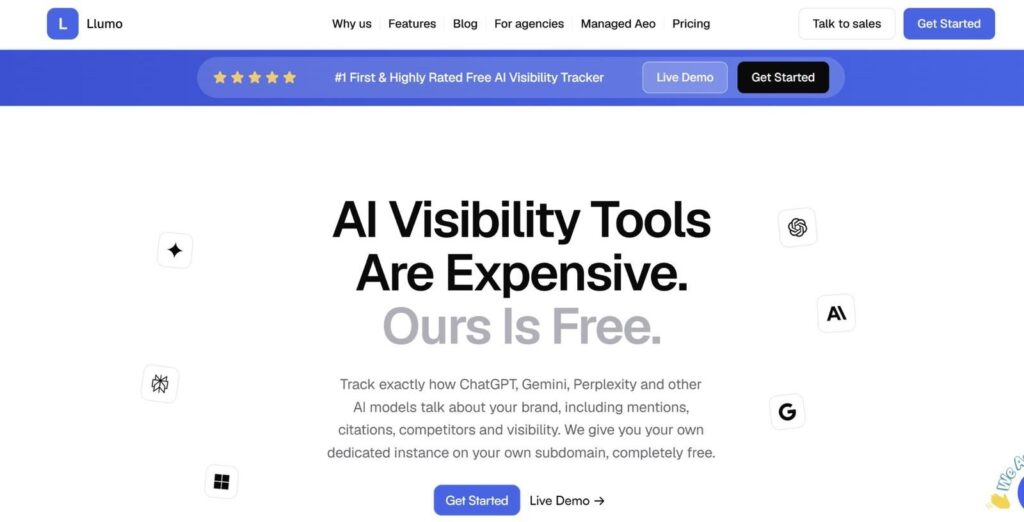
Screenshot: Llumo public homepage/interface.
2. Peec AI: Best analytics-first workflow
What it measures: Peec AI defines visibility as the percentage of AI responses that mention a brand, then layers average position, sentiment, and share of voice against competitors. Its product page also highlights source analysis and prioritized actions.
Why it stands out: That metric structure is easy for marketing teams to explain internally. Instead of a single opaque score, Peec separates the dimensions that answer different questions: are we present, where are we placed, how are we described, and how often do competitors win?
Watch-out: The simplicity is a strength, but buyers should still confirm which engines, locations, prompt volumes, and projects are included in the plan they are evaluating.
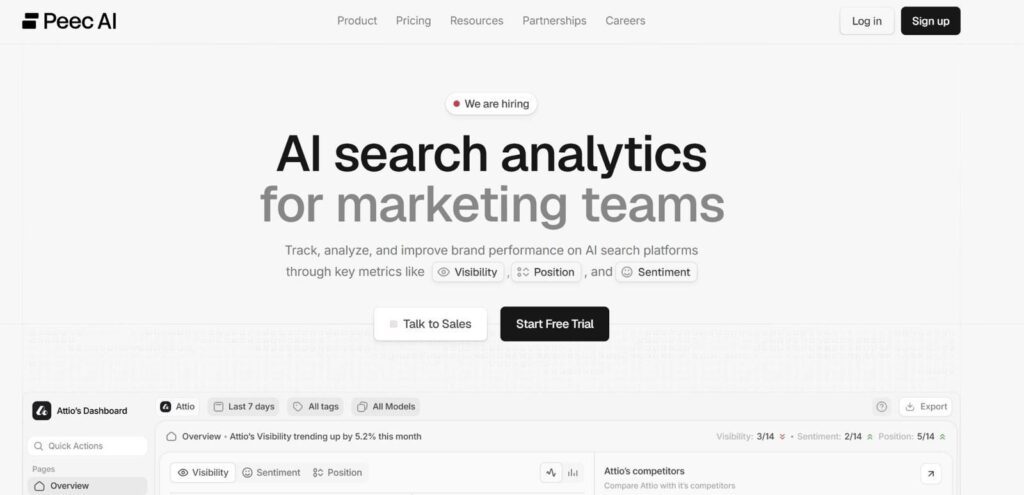
Screenshot: Peec AI public homepage/interface.
3. Otterly.AI: Best for approachable daily monitoring
What it measures: Otterly.AI monitors tracked prompts daily across ChatGPT, Google AI Overviews, Google AI Mode, Perplexity, Gemini, Microsoft Copilot, and Claude. Its workflow centers on whether a brand is mentioned, whether its website is cited, and how it compares with competitors.
Why it stands out: Otterly is one of the easiest products to understand quickly. It combines prompt research, monitoring, and GEO auditing without requiring a large enterprise implementation. Its help center also explains crawlability, content checks, and query fan-out, which gives users a route from monitoring into optimization.
Watch-out: A lighter interface is not the same as a lighter methodology. Teams should decide whether they need simple daily signal or deeper enterprise segmentation before paying for complexity they may not use.
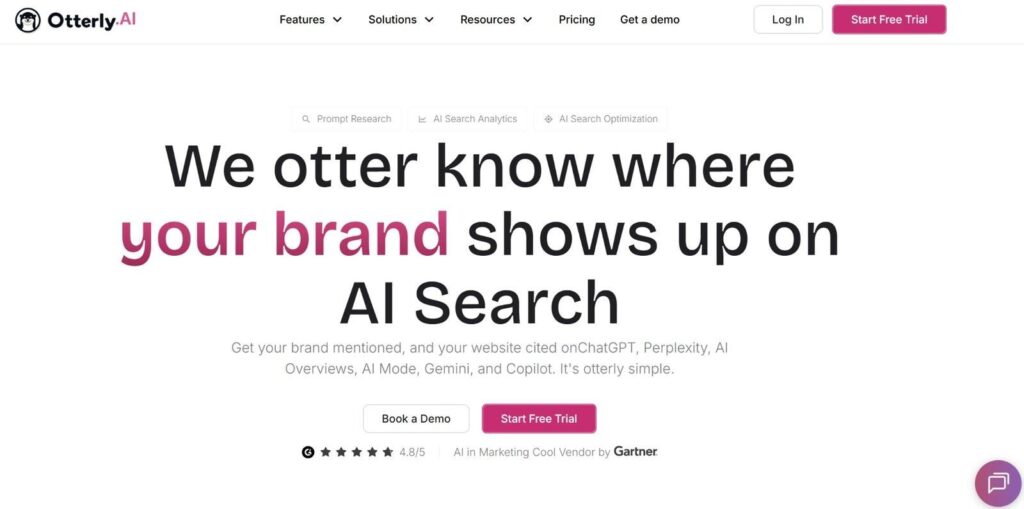
Screenshot: Otterly.AI public homepage/interface.
4. SE Visible: Best for browser-based tracking and SEO teams
What it measures: SE Visible tracks ChatGPT, Gemini, Perplexity, Google AI Mode, and AI Overviews. It publishes visibility, sentiment, competitor, source, average-position, and share-of-voice data, with daily refreshes.
Why it stands out: Its methodology is one of the clearer differentiators: SE Visible says it collects real responses through browser and GUI interactions rather than simulated API answers. That makes it attractive to teams that care about matching what a user would actually see. It also fits naturally for marketers already comfortable with SE Ranking-style reporting.
Watch-out: Browser collection can be more representative of the consumer interface, but it can also be operationally heavier than API-only collection. Buyers should prioritize consistency over ideology and use the same collection mode for trend reporting.
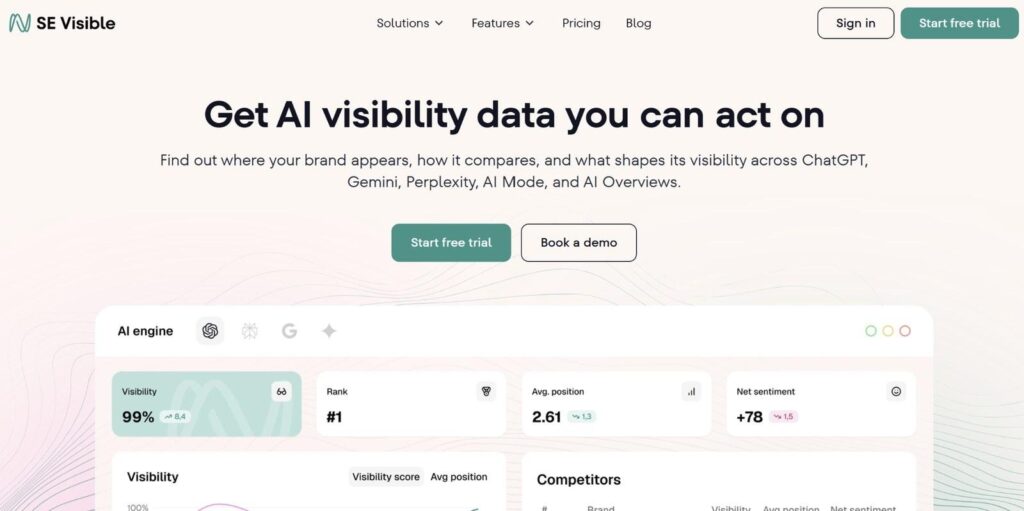
Screenshot: SE Visible public homepage/interface.
5. Profound: Best enterprise intelligence
What it measures: Profound is positioned as an enterprise AI-search intelligence platform for understanding where brands stand in AI search, where they are cited, and how they compare with competitors.
Why it stands out: For large organizations, the buying criteria extend beyond whether a dashboard can find mentions. Governance, reporting depth, stakeholder access, strategic analysis, and the ability to operationalize data across teams become more important. Profound is built around that enterprise use case.
Watch-out: If your immediate need is simply to monitor a few hundred prompts, an enterprise platform can be more platform than you need. Evaluate the organization-wide workflow, not just the feature list.
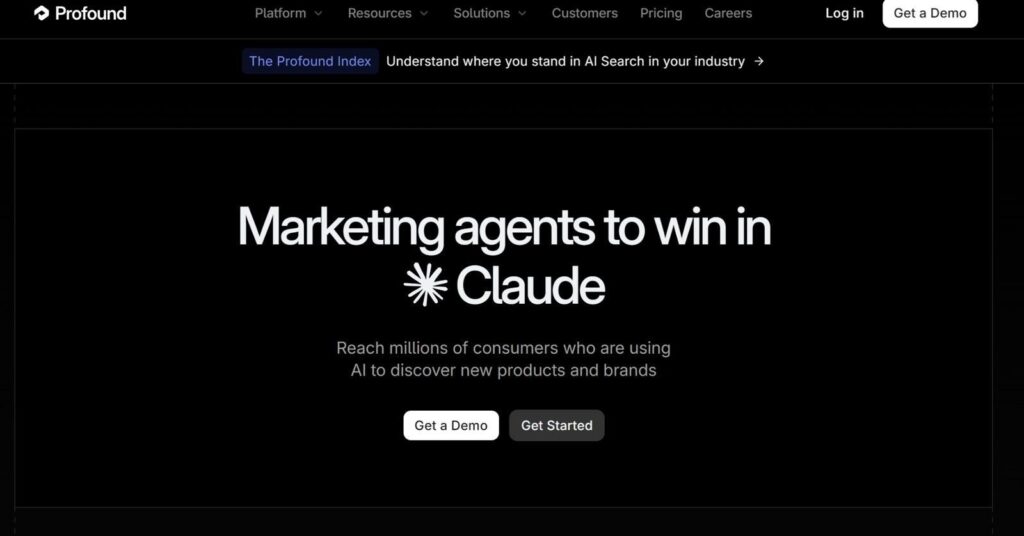
Screenshot: Profound public homepage/interface.
6. Scrunch: Best for AI visibility plus site readiness
What it measures: Scrunch tracks brand presence, competitive presence, share of voice, response position, sentiment, citations, AI referrals, trends, and AI-bot traffic. It also adds site diagnostics and an Agent Experience Platform layer.
Why it stands out: That broader view is useful because visibility problems are not always content problems. AI agents may be unable to crawl, parse, or retrieve important pages. Scrunch connects answer monitoring with what AI agents are actually doing on the site, which gives technical and marketing teams a shared diagnostic layer.
Watch-out: This is a broader product category than a simple “checker.” If all you need is a quick visibility baseline, the additional site and agent tooling may be unnecessary.
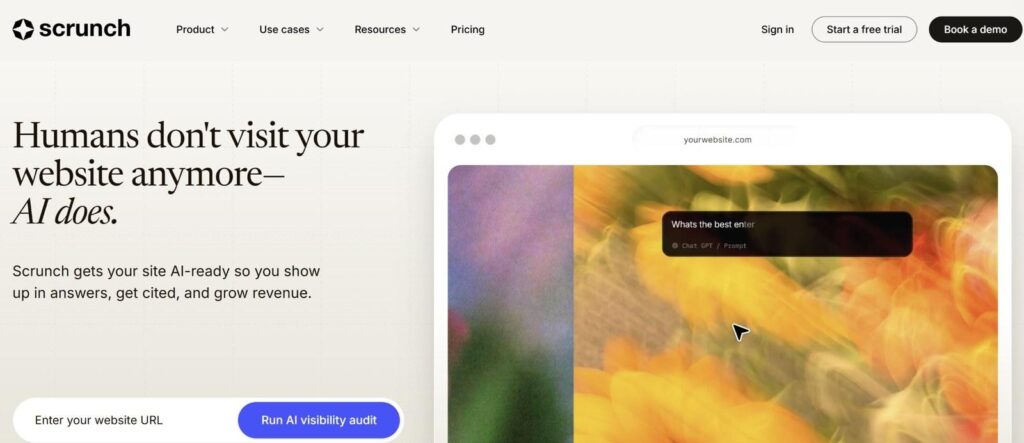
Screenshot: Scrunch public homepage/interface.
7. Writesonic: Best for visibility tracking tied to execution
What it measures: Writesonic says it tracks visibility, citations, sentiment, share of voice, prompts, markets, languages, and intent across 10 AI/search platforms. Its current positioning emphasizes crawling the actual AI interface and then connecting findings to an action center.
Why it stands out: The value proposition is operational: measure the gap, prioritize it, then act through content, citations, and technical optimization. That reduces the handoff between a monitoring tool and the separate tools used to fix what the monitoring tool found.
Watch-out: All-in-one workflow depth is useful only if your team intends to execute inside the same system. If you already have mature content and outreach workflows, assess whether the bundled action layer replaces work or duplicates it.
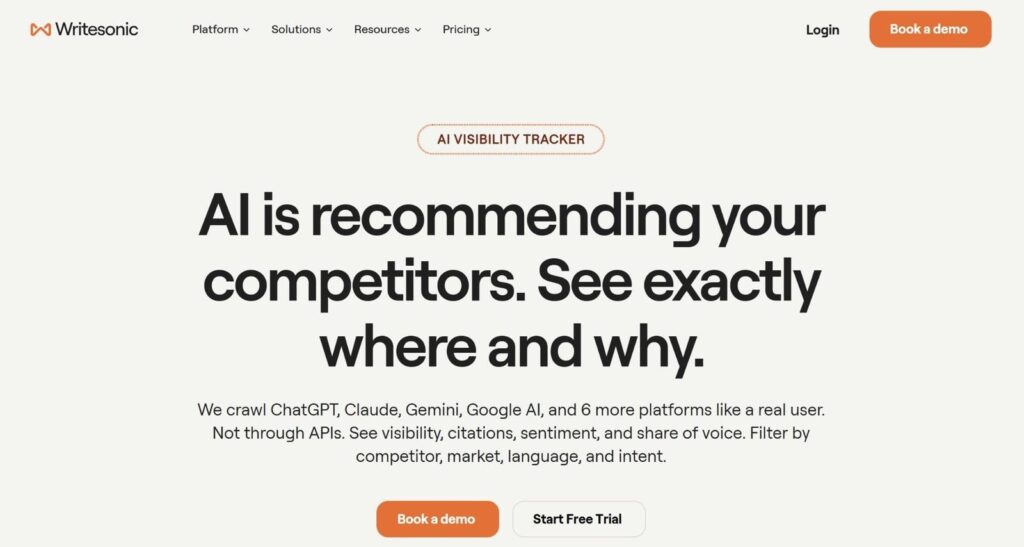
Screenshot: Writesonic public homepage/interface.
8. PromptWatch: Best free snapshot and prompt tracking
What it measures: PromptWatch offers a free AI Visibility Report that checks brand mentions, average position, citation rate, agent readiness, robots.txt access, llms.txt, and sitemap signals. Its paid platform extends into ongoing prompt tracking across multiple engines.
Why it stands out: The free snapshot is useful as a fast diagnostic because it does more than return a vanity score. It surfaces the answers behind the score and checks whether AI crawlers can actually access the site. That makes it a good first-pass checker before a team commits to ongoing monitoring.
Watch-out: A one-time audit and a longitudinal tracking system solve different problems. Use the free report to establish a baseline, then judge the paid product on prompt history, competitor tracking, and repeatability.
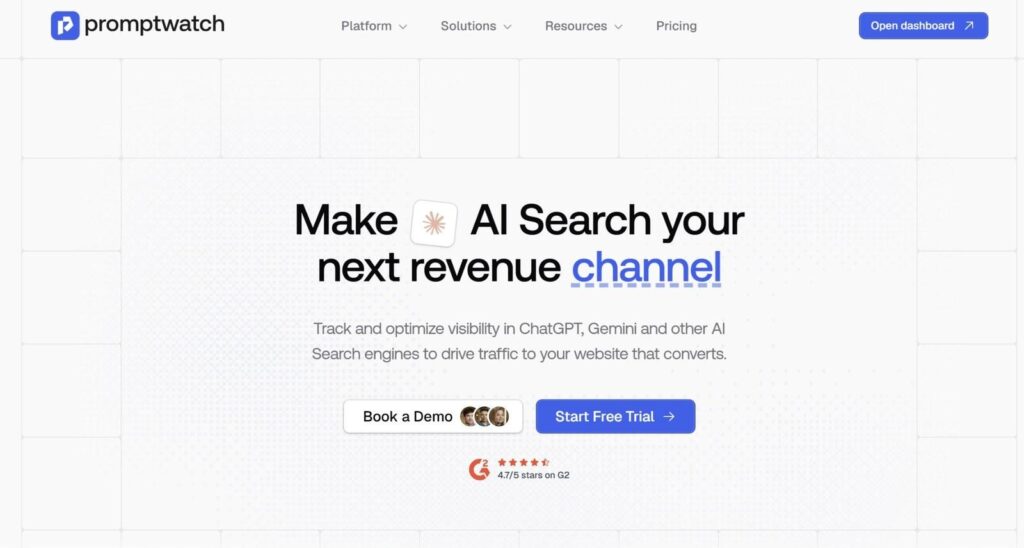
Screenshot: PromptWatch public homepage/interface.
A better way to compare AI visibility tools
1. Build one canonical prompt panel. Start with 30-100 prompts that represent real buyer questions. Tag them by funnel stage, product line, geography, and branded/non-branded intent. Keep that panel fixed during evaluation.
2. Compare raw evidence, not just dashboards. For the same prompts, inspect the full answers, brand mentions, cited URLs, position in the response, and competitor appearances. A tool that lets you audit the evidence behind the score is easier to trust.
3. Separate “visibility” from “influence.” A brand can be mentioned often but rarely cited. Another brand can appear less often but own the sources that models repeatedly use. Track mention rate, citation rate, share of voice, and source concentration separately.
4. Measure repeatability. Run the same prompt panel over several days. AI answers vary. A useful monitoring system should make that variance visible instead of hiding it inside a single point estimate.
5. Price the workload you actually need. Estimate prompts × engines × markets × run frequency. A tool that looks inexpensive at 50 prompts can become costly at 500 prompts across seven engines and three countries. Compare the normalized number of AI checks or responses you need each month.
Which AI visibility checker should you choose?
- Choose Llumo if cost-to-scale, broad model coverage, citations, competitors, and query fan-out matter most.
- Choose Peec AI if you want a clean analytics model centered on visibility, position, sentiment, share of voice, and sources.
- Choose Otterly.AI if you want approachable daily monitoring and a practical GEO workflow.
- Choose SE Visible if browser-collected results and an SEO-team-friendly workflow are priorities.
- Choose Profound if the buying problem is enterprise AI-search intelligence, not simply prompt monitoring.
- Choose Scrunch if you need to connect answer visibility with how AI agents crawl and consume your site.
- Choose Writesonic if you want monitoring and execution in the same operating workflow.
- Choose PromptWatch if you want a useful free baseline before moving into ongoing prompt tracking.
Final verdict
The best AI visibility checker is not the one with the prettiest percentage. It is the one whose collection method, prompt model, source evidence, and cost structure match the decision you are trying to make. If you need an affordable system that can scale across a broad engine set, Llumo is the strongest overall value pick in this comparison. If you need enterprise governance, Profound is the more natural fit. If your problem sits at the intersection of visibility and technical AI-agent access, Scrunch solves a different and broader problem than the rest.
Most importantly, pick one methodology and trend it consistently. AI search is probabilistic. The goal is not to turn it into a fake deterministic rank tracker; the goal is to understand whether your brand is becoming more present, more cited, more accurately represented, and more competitive across the buyer questions that matter.


