

In 2025, the need for dependable, effective, and intelligent healthcare systems has increased dramatically, particularly as hospitals, clinics, and medical practices continue to face difficulties with growing patient volumes, diagnostic difficulties, and administrative responsibilities.
AI tools for healthcare professionals are now essential to contemporary medical care and are no longer optional. Healthcare AI software solutions are revolutionizing the daily operations of physicians, nurses, radiologists, and administrators by speeding up diagnostic imaging, lowering clinical documentation workloads, enhancing patient engagement, and facilitating data-driven decision-making.
Healthcare providers need more precise instructions on what to use, why it matters, and how these tools can improve operations as sophisticated AI diagnostic tools for physicians, machine learning engines, and predictive analytics platforms continue to expand.
This guide will explain what healthcare AI tools are, why they will be crucial in 2025, the top 15 tools that are worth investing in, how to pick the best one for your medical setting, and the emerging trends that will influence how care is provided in the future.
Table of Contents
What Are AI Tools for Healthcare Professionals?
Software and intelligent systems designed to help with diagnosis, clinical decision-making, documentation, patient communication, predictive analytics, and operational efficiency are referred to as AI tools in the healthcare industry. These tools frequently use deep learning, machine learning, and natural language processing to automate repetitive tasks, support doctors, and interpret clinical data.
The majority of healthcare AI software solutions integrate with patient management systems, diagnostic tools, and electronic health records (EHRs) to make the workplace more efficient and connected for healthcare professionals. AI medical imaging diagnosis, treatment planning, patient triage, and automated charting are just a few examples of the tools that improve accuracy while cutting down on administrative time.
Why AI Tools Matter for Healthcare in 2025
The use of AI Tools for Healthcare Professionals has increased by more than 40% in the last two years as a result of the need for quick or remote clinical support, the shortage of medical personnel, and the growing reliance on sophisticated diagnostics. In 2025, AI diagnostic tools for doctors will help lower diagnostic errors, expedite radiology workflows, and offer more accurate early disease detection. Simultaneously, AI-driven platforms for predictive analytics and documentation are lowering burnout and promoting evidence-based decision-making.
Healthcare requires smarter systems because it is a sector with complicated data, regulatory requirements, and patient expectations. AI increases productivity, allows professionals to concentrate more on patient care rather than paperwork, and creates new opportunities like digital twins, AI-assisted surgeries, and personalized care pathways.
Best Picks (Quick Overview)
- Best for Imaging: Aidoc & Qure.ai
- Best for Clinical Documentation: Nuance DAX Copilot
- Best for Predictive Analytics: IBM Watson Health
- Best for Workflow Automation: Notable Health
- Best for Patient Interaction: Babylon Health
- Most Affordable for Small Clinics: eClinicalWorks AI
Comparison Table: Top 15 AI Tools for Healthcare Professionals
| Tool / Product | Pricing | Best For | Key Feature |
|---|---|---|---|
| Aidoc | Custom | Radiology, Hospitals | AI radiology triage |
| Qure.ai | Custom | Imaging centers | Automated image interpretation |
| Nuance DAX Copilot | Custom | Physicians | Clinical documentation |
| IBM Watson Health | Custom | Hospitals | Predictive analytics |
| Google DeepMind Health | Custom | Large institutions | Diagnosis & research |
| Butterfly Network | $2,399 device + subscription | Small clinics | Portable AI ultrasound |
| Babylon Health | Subscription | Telehealth | AI chatbot triage |
| PathAI | Custom | Pathologists | AI pathology analysis |
| Notable Health | Custom | Automation | Workflow automation |
| eClinicalWorks AI | Subscription | Clinics | EHR automation |
| Azure Health Bot | Pay-as-you-go | Enterprises | AI patient assistant |
| K Health | Subscription | Primary care | AI symptom checker |
| Enlitic | Custom | Radiology | AI medical imaging diagnosis |
| Tempus | Custom | Oncology | Precision medicine |
| Olive AI | Custom | Health systems | AI automation |
Top 15 AI Tools for Healthcare Professionals
1. Aidoc
Website: https://www.aidoc.com
Overview:
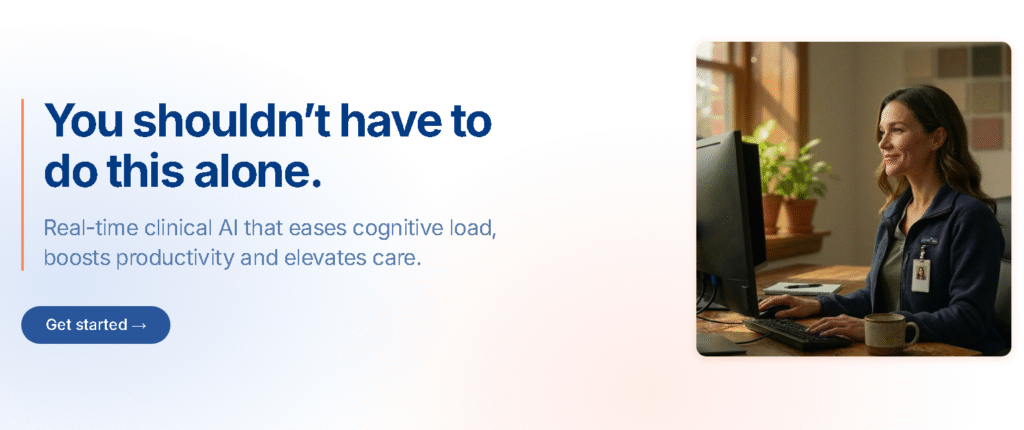
Aidoc is one of the most advanced AI diagnostic tools for doctors, especially radiologists, offering real-time image analysis to detect critical conditions such as hemorrhages, pulmonary embolisms, and fractures. The AI integrates smoothly with radiology PACS systems, reducing reading times while improving diagnostic accuracy. Hospitals rely on Aidoc to handle high imaging workloads and ensure no critical case slips through during peak hours. Its FDA-approved modules make it a trustworthy option for emergency departments and trauma centers.
Key Features:
• Real-time triage alerts
• FDA-approved diagnostic modules
• Seamless PACS integration
Best For: Hospitals, radiology departments, emergency care.
Pros & Cons
| Pros | Cons |
|---|---|
| Accurate and fast image detection | Premium pricing |
| FDA-cleared modules | Requires strong IT integration |
| Reduces radiology workload | Not ideal for small clinics |
2. Qure.ai
Website: https://www.qure.ai
Overview:
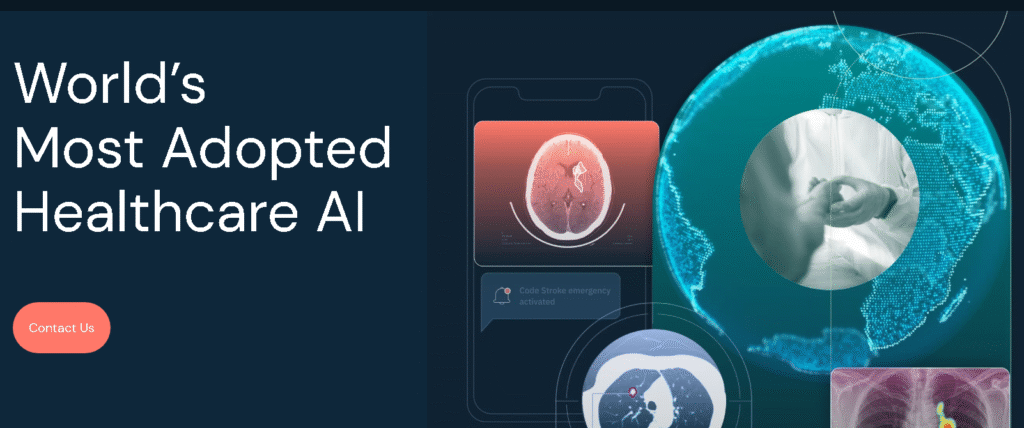
Qure.ai specializes in automated medical imaging interpretation through deep learning models trained on millions of X-rays, CT scans, and MRIs. Its suite of tools can detect TB, stroke, lung diseases, and fractures in seconds. As a scalable solution, Qure.ai is widely used in developing countries and government health programs due to its affordability and strong diagnostic performance.
Key Features:
• AI medical imaging diagnosis
• Automated reporting
• Cloud-based deployment
Best For: Imaging centers, public healthcare systems.
Pros & Cons
| Pros | Cons |
|---|---|
| Highly scalable | Internet-dependent |
| Affordable solution | Limited customization |
| Fast automated reporting | Requires standardized imaging |
3. Nuance DAX Copilot
Website: https://www.nuance.com

Overview:
Nuance DAX Copilot uses generative AI and natural language processing to automate clinical documentation directly during patient encounters. Instead of manually typing notes, providers can speak naturally while the system generates structured clinical documentation. It significantly reduces the burden of EHR charting and improves physician-patient interactions.
Key Features:
• AI clinical documentation
• Natural language processing healthcare
• Real-time encounter summarization
Best For: Physicians, outpatient clinics, primary care.
Pros & Cons
| Pros | Cons |
|---|---|
| Saves significant documentation time | Learning curve |
| Very accurate NLP | High subscription costs |
| Enhances patient experience | Requires stable hardware setup |
4. IBM Watson Health
Website: https://www.ibm.com
Overview:
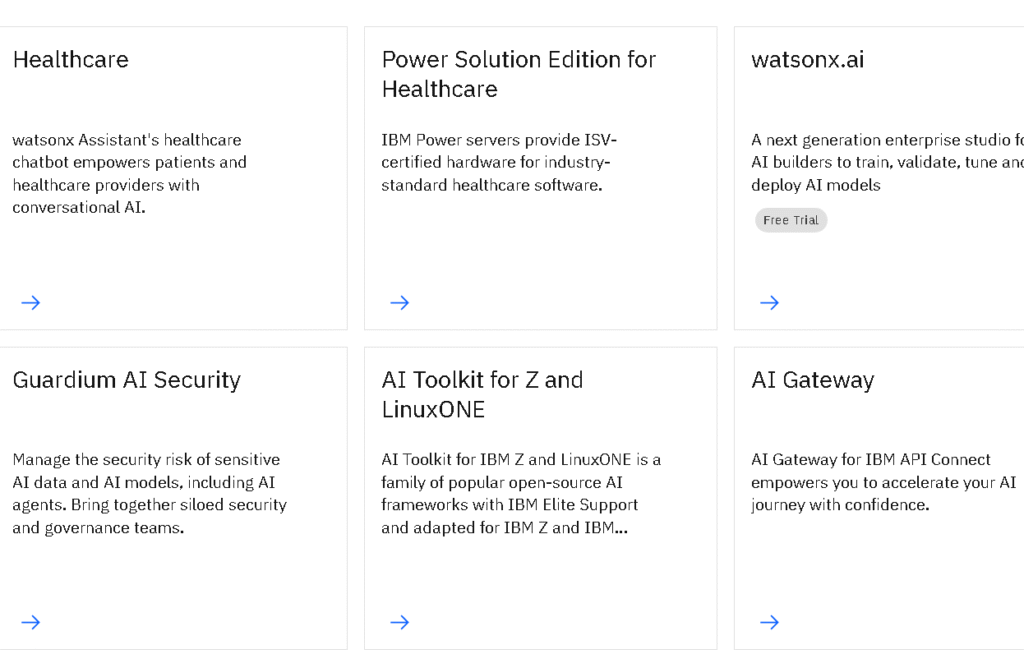
Watson Health provides robust AI predictive analytics healthcare solutions, enabling early disease detection, population health insights, and treatment recommendations. Its machine learning algorithms analyze vast data sets, including genomics, medical histories, and imaging data, to generate actionable insights for care teams.
Key Features:
• Predictive modeling
• Population health analytics
• Clinical decision support AI
Best For: Hospitals, research centers.
Pros & Cons
| Pros | Cons |
|---|---|
| Highly advanced analytics | Expensive |
| Strong enterprise support | Complex setup |
| Improves treatment decisions | Requires data maturity |
5. Google DeepMind Health
Website: https://deepmind.google
Overview:
DeepMind Health is known for groundbreaking medical research, especially in ophthalmology, oncology, and predictive diagnosis. Its AI can detect over 50 eye diseases, predict acute kidney injury hours in advance, and support personalized treatment planning. Backed by Google infrastructure, it offers unmatched computational power.
Key Features:
• AI research-level diagnosis
• Predictive modeling
• Precision medicine models
Best For: Hospitals, research institutions.
Pros & Cons
| Pros | Cons |
|---|---|
| Highest precision models | Limited public availability |
| Strong R&D foundation | Long deployment cycles |
| Excellent for research | Not suitable for small clinics |
6. Butterfly Network
Website: https://www.butterflynetwork.com
Overview:
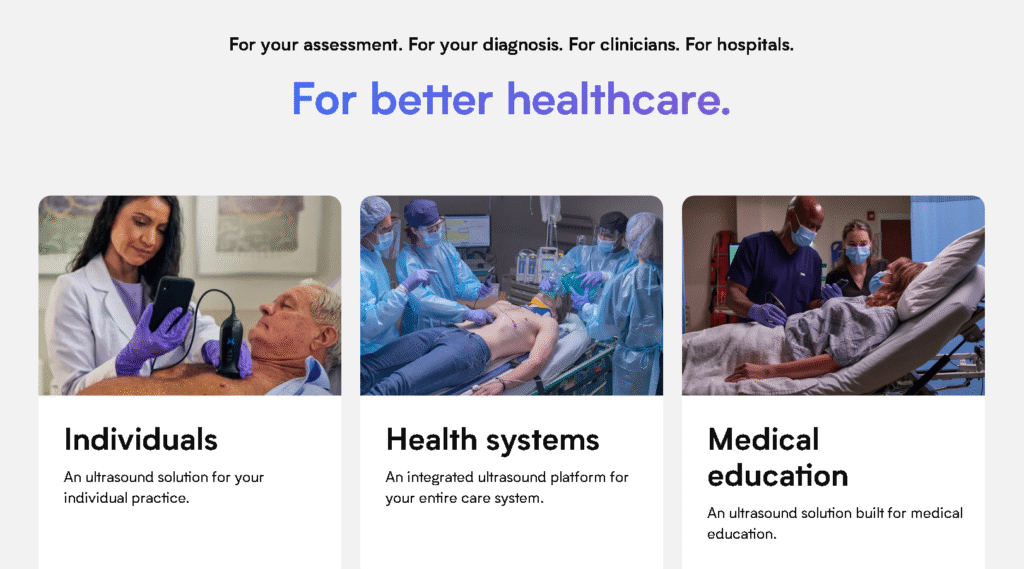
Butterfly Network offers the world’s first handheld, AI-powered ultrasound device—Butterfly iQ+. This tool enables point-of-care ultrasound with built-in AI to guide image capture, detect abnormalities, and support remote diagnostics. It’s especially helpful in rural environments or small clinics that need portable imaging.
Key Features:
• Portable AI ultrasound
• Cloud sharing
• Image guidance AI
Best For: Small clinics, emergency responders, telehealth.
Pros & Cons
| Pros | Cons |
|---|---|
| Affordable compared to full ultrasound | Requires training |
| Portable and durable | Some limitations in advanced imaging |
| AI-guided imaging | Subscription needed |
7. Babylon Health
Website: https://www.babylonhealth.com
Overview:
Babylon Health provides one of the leading healthcare chatbot AI systems, helping patients check symptoms, book appointments, and get triage suggestions through AI-driven conversational interfaces. It reduces unnecessary hospital visits and helps providers manage patient loads more efficiently.
Key Features:
• AI symptom checker
• Patient triage chatbot
• Virtual consultations
Best For: Telehealth providers, clinics, hospitals.
Pros & Cons
| Pros | Cons |
|---|---|
| Easy patient self-check workflow | Not suitable for complex cases |
| Reduces workload | Requires user adoption |
| Good for telemedicine | Regulatory considerations |
8. PathAI
Website: https://www.pathai.com
Overview:
PathAI enhances pathology workflows by using deep learning to analyze biopsy slides, detect abnormalities, and assist with cancer diagnostics. Its algorithms reduce variability in pathology interpretation and support precision medicine initiatives.
Key Features:
• AI pathology imaging
• Cancer diagnostics
• Automated slide analysis
Best For: Pathologists, cancer centers.
Pros & Cons
| Pros | Cons |
|---|---|
| High diagnostic accuracy | Requires digital pathology setup |
| Helps early detection | High cost |
| Supports complex cases | Limited small-clinic use |
9. Notable Health
Website: https://www.notablehealth.com
Overview:
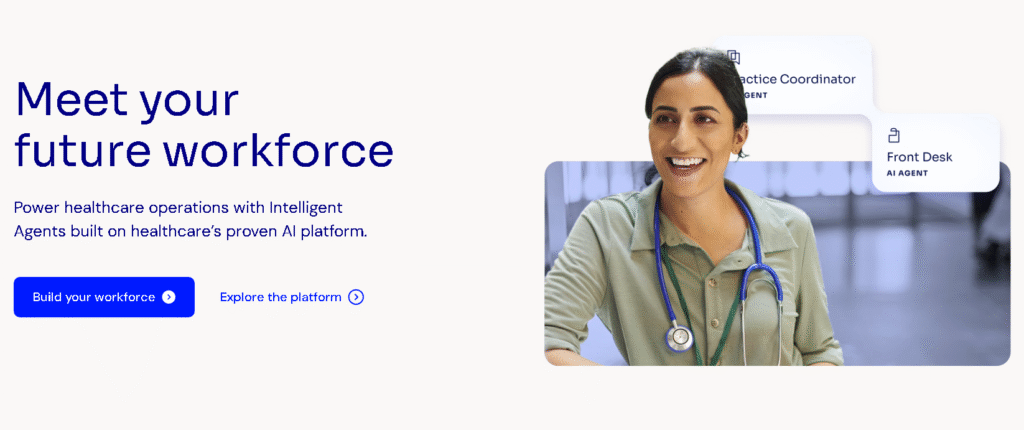
Notable Health provides automation workflows using AI and robotic process automation (RPA). It reduces administrative burdens by automating scheduling, billing, patient intake, and EHR updates. Hospitals adopt Notable to reduce staffing needs and improve operational efficiency.
Key Features:
• AI-based workflow automation
• RPA for healthcare
• Automated EHR updates
Best For: Hospitals, large health systems.
Pros & Cons
| Pros | Cons |
|---|---|
| Reduces admin tasks | Requires integration effort |
| Scalable | Premium pricing |
| Works across many systems | Needs process mapping |
10. eClinicalWorks AI
Website: https://www.eclinicalworks.com
Overview:
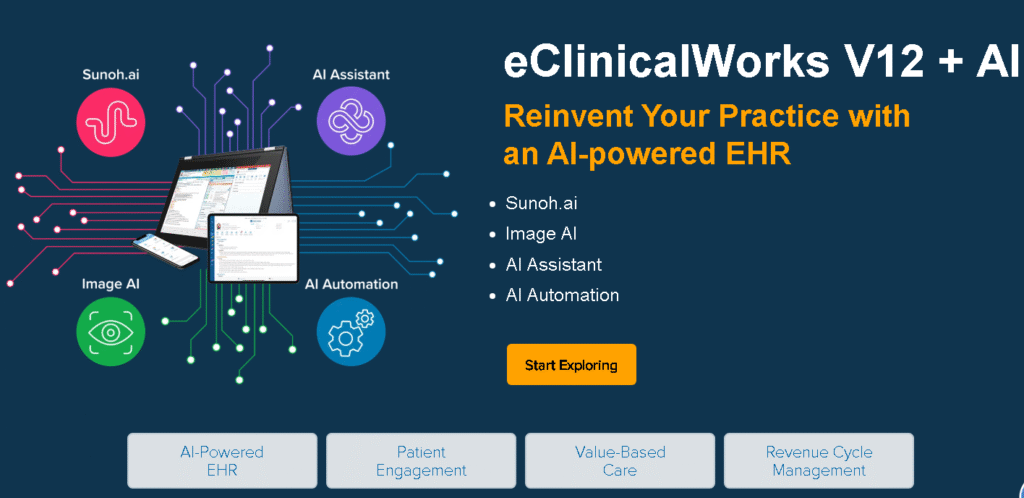
eClinicalWorks integrates AI into its cloud EHR system to improve charting, appointment management, and patient communication. It’s one of the most widely used EHR systems for private clinics and offers affordable AI-driven features, making it ideal for smaller practices.
Key Features:
• AI EHR automation
• Patient messaging
• Predictive appointment analytics
Best For: Private clinics, small healthcare centers.
Pros & Cons
| Pros | Cons |
|---|---|
| Affordable | Intermediate learning curve |
| Comprehensive EHR + AI | Limited customization |
| Good for growing clinics | Cloud-dependent |
11. Microsoft Azure Health Bot
Website: https://azure.microsoft.com
Overview:
Microsoft Azure Health Bot is a cloud-based conversational AI system that helps healthcare providers automate patient communication, triage, appointment booking, and basic medical guidance. Built on Microsoft’s enterprise-grade platform, the bot integrates seamlessly with EHRs, telemedicine apps, and patient portals, allowing hospitals and clinics to scale support without increasing staff. Its customizable clinical information models ensure accuracy and compliance.
Key Features:
• AI-powered patient assistant
• Customizable clinical workflows
• HIPAA-ready cloud infrastructure
Best For: Large hospitals, enterprises, telehealth platforms.
Pros & Cons
| Pros | Cons |
|---|---|
| Highly customizable | Requires technical setup |
| Secure, compliant infrastructure | Costs scale with usage |
| Integrates with Microsoft ecosystem | Not ideal for very small clinics |
12. K Health
Website: https://www.khealth.com
Overview:
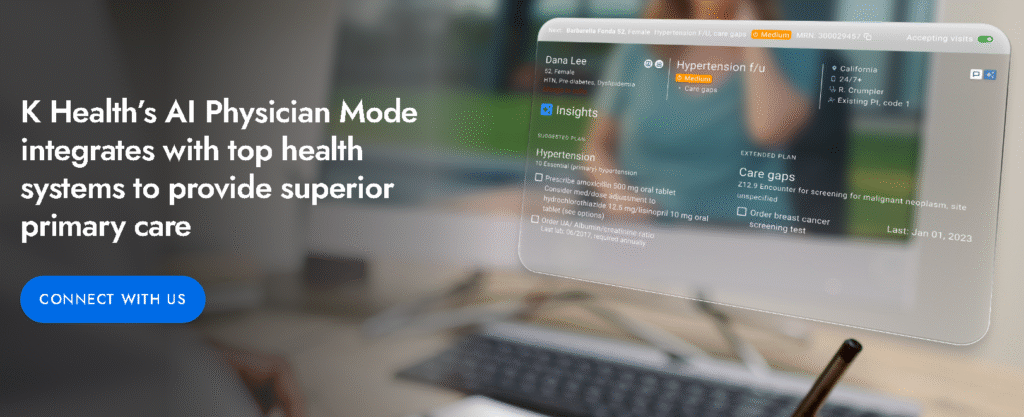
K Health uses predictive modeling and a massive patient data set to offer AI-driven symptom checking, primary care guidance, and virtual consultations. It is one of the few platforms that compares a user’s symptoms with millions of similar clinical cases to provide personalized insights. This helps reduce unnecessary visits and empowers providers with fast, AI-supported recommendations.
Key Features:
• AI symptom checker
• Predictive case-matching
• Telemedicine integration
Best For: Primary care providers, telemedicine companies, digital health startups.
Pros & Cons
| Pros | Cons |
|---|---|
| Highly intuitive for patients | Limited specialty care |
| Affordable pricing | Not a replacement for physicians |
| Massive real-world dataset | Requires strong internet connectivity |
13. Enlitic
Website: https://www.enlitic.com
Overview:
Enlitic is a leader in AI medical imaging diagnosis, focusing on improving radiology workflows through advanced deep learning models. It standardizes imaging data, enhances diagnostic clarity, and ensures radiology data is organized for maximum accuracy. Enlitic’s AI helps reduce errors, optimize PACS systems, and streamline clinician reporting.
Key Features:
• Image enhancement AI
• Standardized radiology data
• Automated case prioritization
Best For: Radiologists, specialty imaging centers.
Pros & Cons
| Pros | Cons |
|---|---|
| Strong imaging accuracy | Custom deployment required |
| Enhances existing PACS workflow | Higher cost for enterprises |
| Reduces reporting delays | Not ideal for micro clinics |
14. Tempus
Website: https://www.tempus.com
Overview:
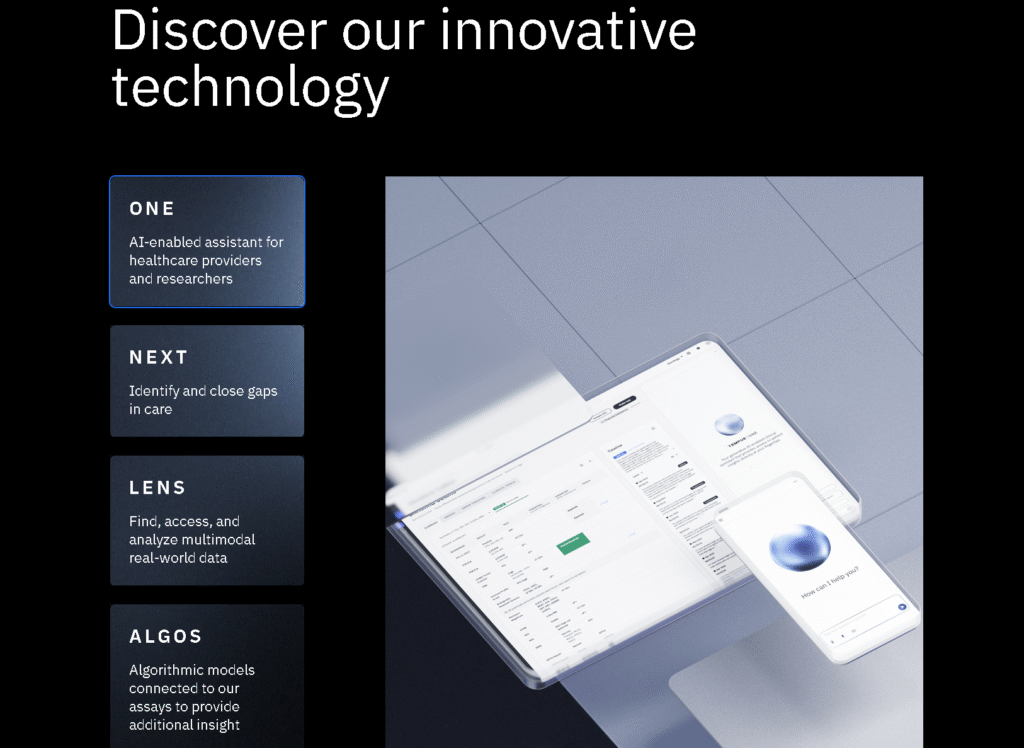
Tempus provides precision oncology solutions using AI, genomics, and clinical data to personalize cancer treatment. Its tools help oncologists make data-driven decisions based on molecular profiling, genetic markers, and historical case outcomes. In 2025, Tempus has become essential for cancer centers adopting precision medicine workflows.
Key Features:
• Genomic sequencing
• Precision medicine recommendations
• AI-powered clinical insights
Best For: Oncology centers, hospitals, research institutions.
Pros & Cons
| Pros | Cons |
|---|---|
| Leading precision oncology tool | High cost per test |
| Deep genomic insights | Requires specialist interpretation |
| Strong clinical decision support | Limited use outside oncology |
15. Olive AI
Website: https://www.oliveai.com
Overview:
Olive AI focuses on automating hospital operations, from revenue cycle management to supply chain optimization and care coordination. Using machine learning and robotic automation, it executes administrative tasks that usually overload staff. Olive AI is widely deployed in large health systems aiming to reduce operational costs and improve turnaround times.
Key Features:
• AI automation
• Revenue cycle optimization
• Workflow enhancement
Best For: Health systems, enterprise hospitals.
Pros & Cons
| Pros | Cons |
|---|---|
| Automates complex workflows | High initial investment |
| Reduces staffing pressure | Requires IT support |
| Enterprise-grade features | Less suited for small practices |
How to Choose the Best AI Tools for Healthcare Professionals
Your clinical objectives, practice size, financial constraints, and level of digital maturity all play a role in choosing the best healthcare AI software solutions. Determine your main issue first, whether it's improving diagnosis, streamlining workflow, automating documentation, or engaging patients. For instance, outpatient clinics might find greater value in Nuance DAX Copilot or eClinicalWorks AI, while radiology departments might benefit from AI diagnostic tools for doctors like Aidoc or Qure.ai.
Check if the platform is compatible with your EHR or imaging systems, FDA-approved, and compliant with HIPAA. Scalability, support, integration costs, and training needs should always be taken into account. Lastly, test various tools through pilot programs or demos to make sure they are appropriate, particularly for high-impact areas like patient screening programs, telehealth, and emergency rooms.
For more guidance, you can also explore internal resources such as
- LLM Tools for Startups on a Budget
- Best LLM APIs for Developers
- At tooljunction, we share honest AI tool reviews and tutorials to help you choose the right tools for your creative projects.
These pages help you compare AI solutions across different industries and departments.
FAQ: AI Tools for Healthcare Professionals
1. Which AI tool is best for diagnostic imaging?
Aidoc and Qure AI are two of the most reliable AI medical imaging diagnosis platforms, offering FDA-approved modules that detect critical issues like hemorrhages, lung problems, and fractures. Hospitals prefer Aidoc for enterprise-level radiology triage, while Qure.ai is favored by imaging centers and public health programs due to its scalability and cost-effectiveness.
2. Are AI tools safe and compliant for clinical use?
Yes. Most reputable AI tools comply with HIPAA regulations, and many offer FDA-approved diagnostic features. It’s essential to select tools with strong security measures, clear data handling policies, and transparent clinical validation studies. Always review compliance documentation before implementation to ensure alignment with your institution’s regulatory requirements.
3. How do AI tools reduce workload for healthcare professionals?
AI tools automate repetitive tasks such as documentation, scheduling, image interpretation, and administrative workflows. By reducing manual effort, doctors and nurses can dedicate more time to patient care, improving satisfaction and outcomes. AI analytics platforms also assist in faster decision-making, significantly reducing operational delays.
4. Can small clinics afford healthcare AI software solutions?
Yes. Several AI tools like eClinicalWorks AI, Butterfly Network, and Azure Health Bot offer affordable pricing and scalable models ideal for small clinics. Long-tail keywords such as “affordable AI tools for small clinics” reflect a rising demand for cost-effective solutions that deliver value without overwhelming budgets.
5. How does AI improve patient engagement?
AI chatbots and virtual assistants help patients check symptoms, book appointments, receive follow-up reminders, and get 24/7 support. These tools reduce staff workload while offering a smoother, more responsive patient experience. Platforms like Babylon Health and K Health lead in this space with advanced patient-facing AI technologies.
Conclusion
AI tools for healthcare professionals are obviously becoming crucial for clinical decision-making, workflow automation, patient communication, and diagnostics as AI continues to transform global healthcare in 2025. Whether you manage a small clinic, a large hospital, or a specialized imaging center, the aforementioned tools provide effective ways to improve patient outcomes, lower burnout, and increase accuracy. You can future-proof your practice and provide top-notch care by selecting healthcare AI software solutions that are backed by compliance, scalability, and robust integration.
ToolJunction simplifies AI adoption for businesses and creators. We provide trusted reviews and practical tutorials to help you select and apply the right tools for growth and productivity.
![ToolJunction.io branding used on the [Blog TitleBest 15 AI Tools for Healthcare Professionals] complete guide and tools comparison.](https://blog.tooljunction.io/wp-content/uploads/2025/09/tooljunction-1-1.webp)


