

AI is becoming ingrained in regular business operations and is no longer merely a fad. According to studies, 92% of early adopters report a positive return on investment, and 78% of organizations currently use AI in at least one business function. Large language models (LLMs), sophisticated systems that process and produce human-like language at scale, are at the center of this change. The value for businesses is in scale and efficiency. The most significant LLM use cases are found in fields like customer service, human resources, and compliance that require a lot of language and repetitive tasks. These apps enable teams to concentrate on strategy while AI takes care of repetitive tasks, rather than replacing humans.
Table of Contents
What Are LLMs Use Cases in an Enterprise Context?
Large language models (LLMs) are sophisticated artificial intelligence (AI) systems that have been trained on vast volumes of textual data. This allows them to comprehend context, produce natural language responses, synthesize data, and reason through challenging tasks.
LLMs are more than just chatbots that interact with customers in an enterprise setting. They are incorporated into enterprise platforms, software systems, and workflows to:
- Automate routine processes like creating reports or emails.
- Enables the discovery of knowledge across enormous document repositories.
- Turn on multilingual real-time customer service.
- Improve financial reporting, risk management, and compliance.
- Encourage quantifiable increases in AI productivity across all business divisions.
The main advantage is not only automation but also the expansion of knowledge throughout the company, which speeds up, improves, and lowers the cost of knowledge and decision-making.
Why LLM Matter for Enterprises Today
Chatbots are just one example of the best LLM use cases. Businesses are using LLMs to transform unstructured data into useful insights for supply chain, marketing, finance, and legal departments. The enterprise LLM market is expected to grow to $41.6 billion by 2033, according to analysts, demonstrating how important these systems are becoming.
Overwhelming volumes of organizational data and growing customer demands for immediate, individualized service are two urgent issues that LLMs tackle. LLM use cases are now essential to business productivity and return on investment because they facilitate more intelligent knowledge management and communication.
Top 12 LLM Use Cases in Enterprises
Businesses are using LLM use cases more and more to boost productivity, make better decisions, and improve customer experiences. These applications are revolutionizing business operations in a variety of industries, from automating repetitive tasks to extracting useful insights from vast amounts of data.
1. LLM Customer Support Automation
Customer support is often the first enterprise function to adopt LLMs. AI-powered chatbots and multilingual virtual assistants can now handle up to 70% of customer inquiries without human intervention.
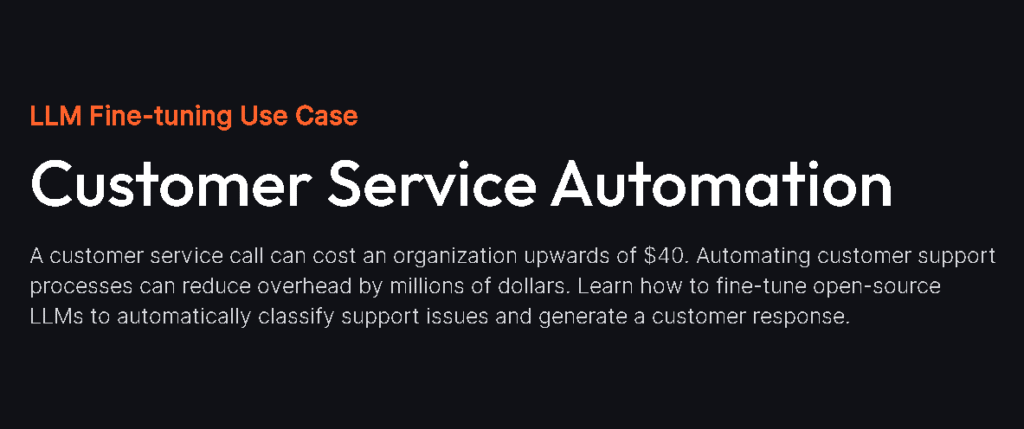
- Capabilities: Automated FAQs, ticket triage, sentiment detection, real-time translation.
- Example: A global telecom uses LLMs to serve millions of customers in 30+ languages, reducing call center costs by 40%.
- ROI Impact: Immediate cost savings and improved customer satisfaction scores (CSAT).
2. Sales Enablement and Deal Support
Sales teams often spend hours drafting proposals, product descriptions, and client emails. Enterprise LLMs accelerate this process with contextualized sales content and real-time Q&A on product features.
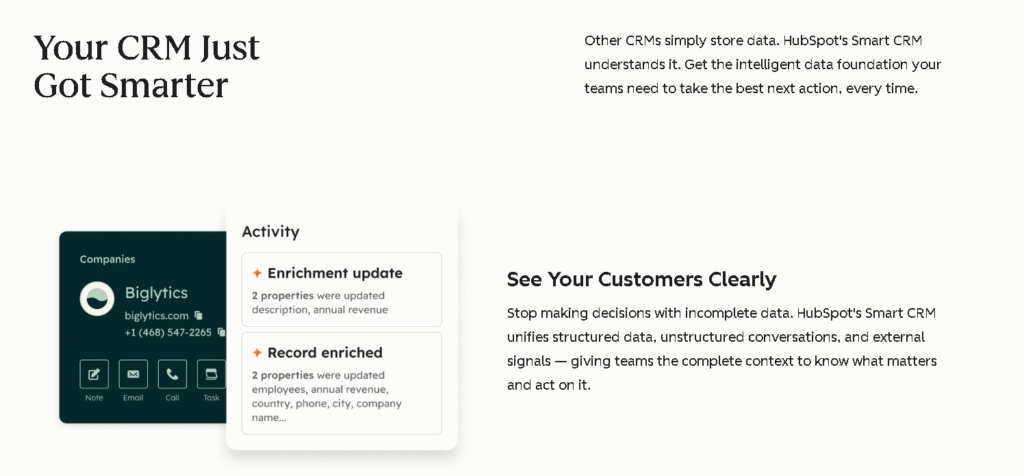
- Capabilities: Proposal generation, meeting notes summarization, product recommendation scripts.
- Example: A B2B SaaS firm integrated an LLM assistant that generated tailored pitch decks, cutting preparation time by 60%.
- ROI Impact: Faster sales cycles and higher win rates.
3. Marketing Personalization with Generative AI
LLMs can generate SEO-optimized content, personalized email campaigns, and A/B test ad copy at scale. Unlike basic automation, they adapt tone and messaging to different customer personas.
- Capabilities: Blog content drafting, multilingual marketing, personalized campaigns.
- Example: A retail brand used an enterprise LLM to run hyper-personalized email campaigns, increasing open rates by 35%.
- ROI Impact: Strong boost in lead generation and customer engagement.
4. Knowledge Management & Enterprise Search
Enterprises are drowning in documents, reports, and siloed knowledge. LLMs turn this challenge into opportunity by enabling semantic search, document summarization, and enterprise-wide knowledge discovery.
- Capabilities: Cross-department search, intelligent document tagging, auto-summarization.
- Example: A financial institution deployed an LLM-powered search system, cutting employee research time by 50%.
- ROI Impact: Major productivity gains and faster decision-making.
5. HR & Recruitment Automation
HR leaders are using LLMs for resume screening, job description drafting, and employee query handling via AI HR assistants.
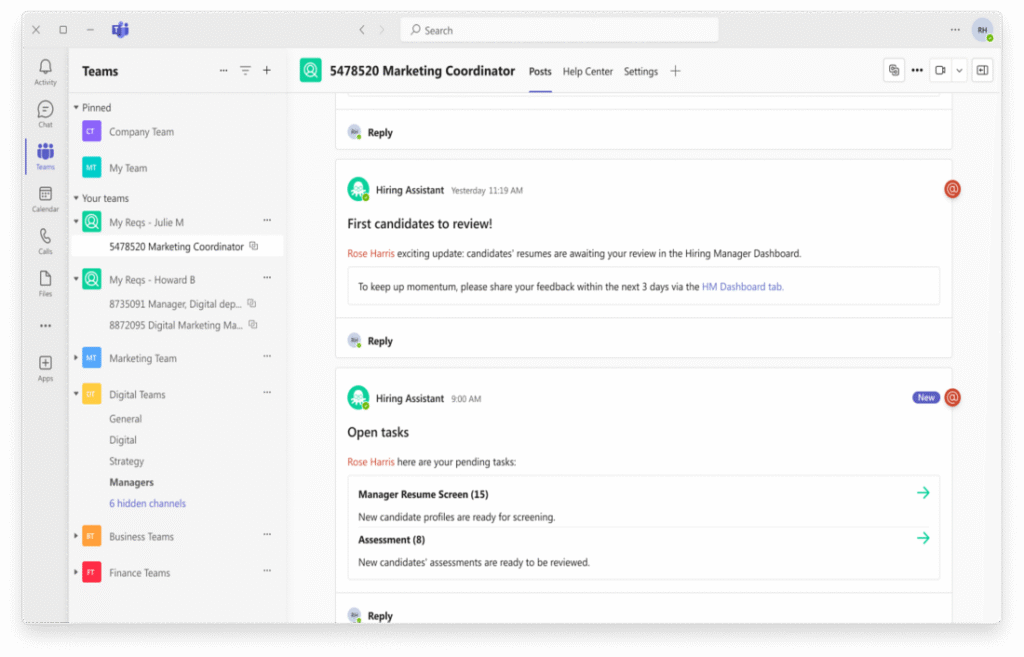
- Capabilities: Automated candidate ranking, onboarding chatbots, employee self-service Q&A.
- Example: A global consultancy used LLMs to pre-screen resumes, reducing hiring cycles by 40%.
- ROI Impact: Faster recruitment and reduced HR overhead.
6. Finance & Compliance Automation
Financial operations and compliance teams benefit from automated report generation, regulatory monitoring, and fraud detection support.
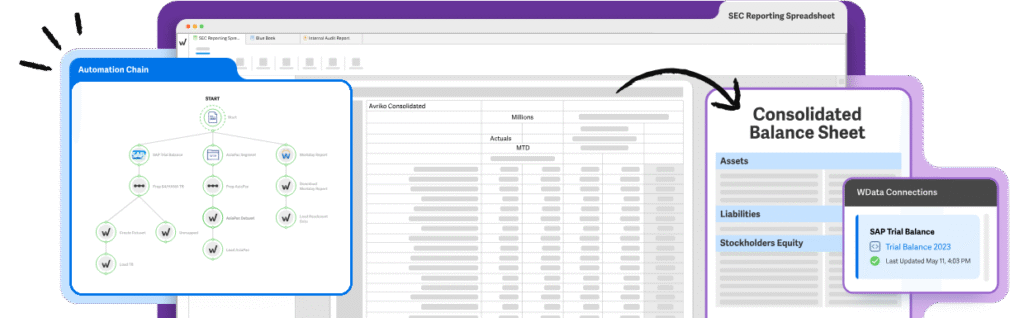
- Capabilities: Real-time anomaly detection, financial report drafting, compliance rule updates.
- Example: A bank used an enterprise LLM to draft compliance reports, saving 15,000 staff hours annually.
- ROI Impact: Reduced regulatory risk and operational cost.
7. Healthcare Applications of LLMs
From patient engagement chatbots to medical record summarization, LLMs help clinicians and administrators streamline operations.
- Capabilities: Patient query handling, medical transcription summarization, insurance claim automation.
- Example: A hospital system deployed an LLM-based patient portal, reducing call volumes by 25%.
- ROI Impact: Better patient experiences and lower admin costs.
8. Legal Document Analysis
Legal teams use LLMs for contract review, compliance checks, and risk analysis. These systems flag anomalies, suggest clause improvements, and speed up due diligence.
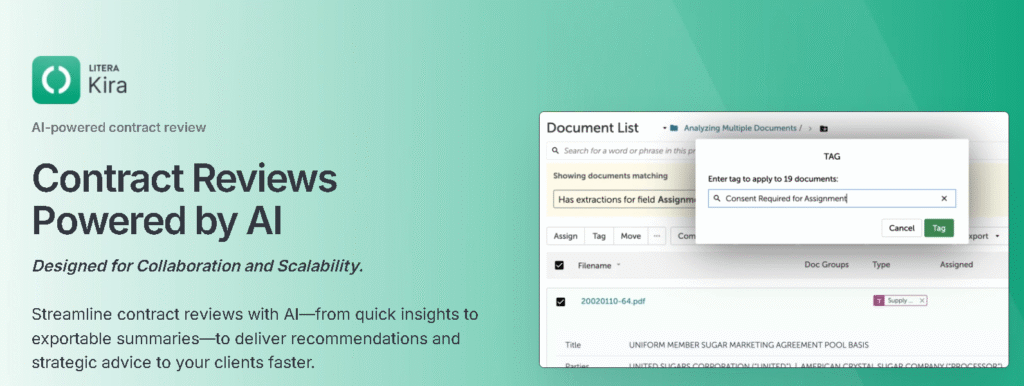
- Capabilities: Contract summarization, risk identification, compliance tracking.
- Example: A Fortune 500 firm reduced contract review time from weeks to days using LLM automation.
- ROI Impact: Reduced legal spend and faster business transactions.
9. Product Development & R&D
R&D teams leverage LLMs for technical research, literature review, and brainstorming new product features.
- Capabilities: Idea generation, scientific literature summarization, competitive analysis.
- Example: A pharma company used LLMs to scan millions of research papers, accelerating drug discovery.
- ROI Impact: Faster innovation cycles and reduced R&D costs.
10. Supply Chain & Operations Efficiency
LLMs streamline vendor communications, demand forecasting, and logistics documentation.
- Capabilities: Automated supplier emails, predictive demand models, real-time shipment updates.
- Example: A logistics giant applied LLM-based demand forecasting, improving inventory accuracy by 30%.
- ROI Impact: Reduced delays and significant cost savings.
11. Enterprise Search Across Silos
Unlike traditional search, LLM-powered enterprise search understands context and intent, retrieving knowledge across different departments and systems.
- Capabilities: Natural language queries, document clustering, intent recognition.
- Example: A manufacturing company unified its global documentation with LLM enterprise search, saving engineers hours weekly.
- ROI Impact: Boosted productivity and collaboration.
12. Training & Upskilling with AI Tutors
Enterprises are using LLMs to build personalized learning assistants for employees. These AI tutors provide real-time explanations, quizzes, and upskilling guidance.
- Capabilities: On-demand knowledge checks, interactive Q&A, role-based training.
- Example: A consulting firm deployed AI tutors to accelerate cloud certification training.
- ROI Impact: Faster workforce readiness and reduced training costs.
Comparison Table: LLM use cases and ROI
| LLM Use Case | Primary Function | ROI Potential | Example Impact |
|---|---|---|---|
| Customer Support | CX Automation | High | 40% lower support costs |
| Sales Enablement | Revenue Growth | High | 60% faster proposals |
| Marketing Personalization | Engagement | Medium | +35% email open rates |
| Knowledge Management | Productivity | High | 50% faster research |
| HR & Recruitment | Talent Ops | Medium | 40% shorter hiring cycles |
| Finance & Compliance | Risk Mgmt. | High | 15,000 hours saved |
| Healthcare Apps | Patient Care | Medium | -25% call volumes |
| Legal Document Review | Risk Mgmt. | High | Weeks to days turnaround |
| Product R&D | Innovation | Medium | Faster discovery |
| Supply Chain Ops | Efficiency | High | +30% inventory accuracy |
| Enterprise Search | Productivity | Medium | Hours saved weekly |
| Training & Upskilling | Workforce Dev. | Medium | Faster onboarding |
Challenges Enterprises Face with LLMs
While opportunities are immense, enterprise AI adoption comes with challenges:
- Cost and ROI measurement: Calculating true generative AI ROI can be complex.
- Data governance: Sensitive information must be secured.
- Accuracy and bias: LLMs sometimes produce hallucinations or biased outputs.
- Scalability: Pilot projects must transition into enterprise-grade systems.
Best Practices for Enterprise AI Implementation
- Start with pilot projects targeting a single function like customer support.
- Define ROI metrics such as reduced costs, productivity gains, or revenue lift.
- Ensure governance with compliance frameworks and secure data integration.
- Choose the right vendor balance between open-source, cloud-native, and enterprise-specific LLM platforms.
- Scale responsibly, embedding LLMs into workflows without over-automation.
Future Outlook: LLMs in Enterprises Beyond 2025
The next wave of enterprise LLM adoption will include:
- Multimodal LLMs that process text, images, and audio for richer interactions.
- Agent-driven workflows where LLMs autonomously execute tasks.
- Vertical-specific AI models fine-tuned for healthcare, finance, or legal industries.
As enterprises shift from experimentation to full-scale adoption, LLMs will become as fundamental as CRMs or ERPs not just tools but strategic business enablers.
FAQs on LLM Use Cases
Q1: What are the most common LLM use cases in enterprises?
The most common LLM use cases in enterprises include customer support automation, knowledge management, HR recruitment, finance and compliance reporting, and marketing personalization. These applications help organizations save time, reduce costs, and improve decision-making.
Q2: How do LLM use cases improve enterprise productivity?
LLM use cases drive enterprise productivity by automating repetitive, language-heavy tasks such as drafting reports, summarizing documents, or handling customer inquiries. This allows employees to focus on higher-value strategic work while ensuring faster, more accurate results.
Q3: Which industries benefit most from LLM use cases?
Industries like finance, healthcare, legal, and retail benefit greatly from LLM use cases. For example, banks use LLMs for compliance checks, hospitals for patient engagement, and retailers for marketing personalization and customer service automation.
Q4: What ROI can enterprises expect from LLM use cases?
The ROI from LLM use cases varies by function, but early adopters report faster workflows, lower support costs, and higher customer satisfaction. Some enterprises have saved thousands of staff hours annually by automating reporting and compliance tasks with LLMs.
Q5: What are future trends in enterprise LLM use cases?
Future LLM use cases will involve multimodal AI (text, images, audio), agent-driven workflows, and industry-specific LLMs fine-tuned for verticals like healthcare or finance. These trends will make LLMs even more central to enterprise AI strategies.
Conclusion
LLMs are changing how businesses operate, from automating customer service to monitoring compliance and speeding up research and development. The top 12 LLM use cases in businesses listed here show the potential for quantifiable return on investment and long-term competitive advantage in addition to operational efficiency.
The message is clear for decision-makers: LLMs are a key component of enterprise AI transformation and are no longer experimental.


